A home inspection is the one part of a real estate transaction that exists entirely for the buyer. The agent has a deal to close. The seller has a house to sell. The lender has a loan to fund. The inspector is the only person in the process whose single job is to tell you, plainly, what you’re actually buying — while you still have room to do something about it.
That is how we approach every inspection: as your set of eyes, and no one else’s.

What a Morrison Plus home inspection covers
A home inspection is a thorough, non-invasive evaluation of the house as it stands on the day we walk it. We examine the systems and components that make a home safe, sound, and functional, and we document what we find with photographs and plain-language explanations. Standard scope includes:
- Roof coverings, flashing, gutters, and drainage
- Foundation, framing, and structural components
- Exterior cladding, grading, walkways, decks, and balconies
- Garage, including the door and its safety reverse
- Electrical service, panels, wiring, and devices
- Plumbing supply, drains, fixtures, and water heaters
- Heating and cooling equipment and distribution
- Attic insulation and ventilation
- Interior walls, ceilings, floors, windows, and doors
- Built-in appliances
We inspect to a recognized Standard of Practice — a defined, consistent scope — so what gets looked at doesn’t depend on the mood of the person doing the looking. Every house is different in size, age, and construction, and the inspection adapts to what’s actually there.
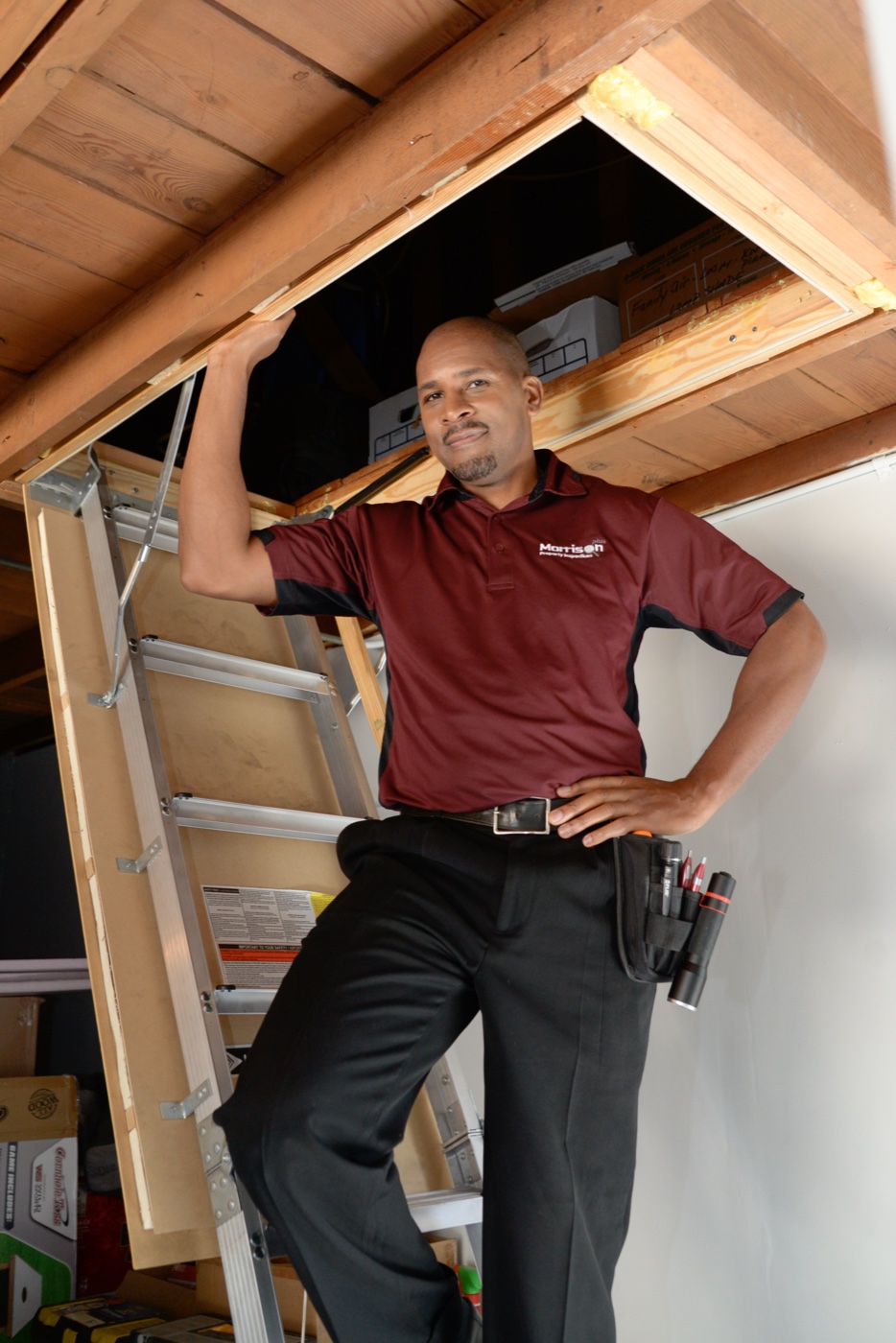
Up in the attic — framing, insulation, and ventilation. One of the places a house tells the truth about itself.
From the roof to the crawlspace, inside and out
A house doesn’t reveal its condition from the living room. The findings that matter most are usually in the places nobody looks — on the roof, up in the attic, down in the crawlspace, behind the water heater, inside the panel.
We go there. Our inspectors get onto accessible roofs, into attics, and under the house, because that’s where you find the active leak, the compromised framing, the corroded connection, the moisture that hasn’t reached the ceiling yet. A report is only as good as the access behind it.
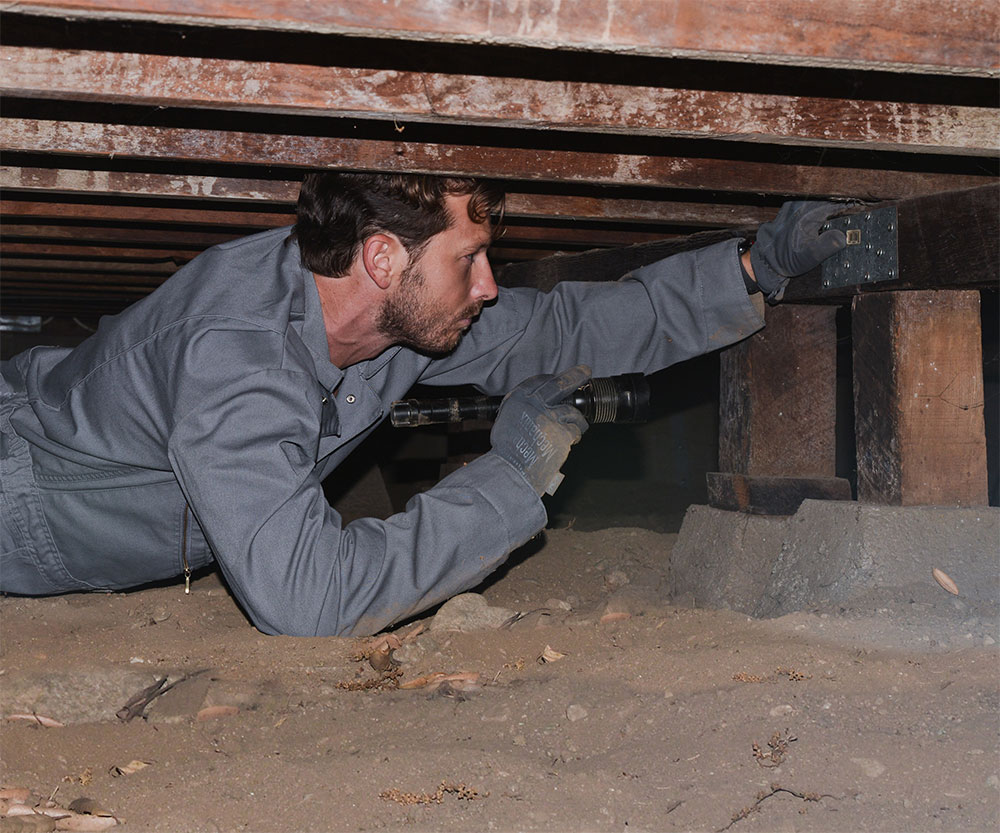
Under the house — the vantage that reveals foundation, framing, and plumbing conditions you can’t see from inside.
The right inspector matters more than the price
A home inspection is only as good as the person performing it, and the gap between inspectors is not small. What surprises most buyers is how little a license tells you: some states license inspectors and require exams and continuing education, and others don’t license the profession at all — where anyone can print business cards and start inspecting houses tomorrow.
What doesn’t vary are the professional standards. So the useful questions aren’t about a license number — they’re these: Does the inspector follow a recognized Standard of Practice and Code of Ethics? Do they carry Errors & Omissions and general liability insurance? Will they show you a real sample report before you hire them? And do they sell repairs on the properties they inspect?
Morrison Plus was founded in 2007 by Duane Morrison, a director on the national board of the American Society of Home Inspectors (ASHI). Our inspectors work to established Standards of Practice and a written code of ethics, carry Errors & Omissions insurance, and inspect full time. This is their profession, not a weekend sideline. When you’re comparing inspectors, the lowest quote is rarely the real question — what gets found, how clearly it’s explained, and whether the person will stand behind it, is.
We inspect. We never repair.
We do not do repairs. We don’t sell you a fix for anything we find, we don’t take referral fees from contractors, and we have no financial stake in the outcome of the inspection. It’s the industry’s most important ethical line — both the ASHI and InterNACHI codes of ethics prohibit a member from performing repairs, for a fee, on a property they’ve inspected — and we hold every inspector in our network to it.
That independence is the entire value of the report. You can trust what’s in it precisely because we don’t profit from what’s in it. We don’t provide repair estimates either — but we can refer you to a company that prepares them based on our report, purely as guidance to help you find where to get the work done. Who you hire is always your choice. We’re on your side of the table and nobody else’s.
What’s not included — and what you can add
A standard home inspection is a visual, non-invasive evaluation of readily accessible areas. We don’t open walls, lift flooring, or dismantle equipment — we report on what can be seen and safely reached on the day of the inspection. Some parts of a house are hidden by design — inside a sewer line, up a chimney flue, behind a finished wall — and reaching them takes specialized equipment. Those are available as add-ons, and you can bundle any of them into the same appointment:
- Sewer line / camera inspection — the underground line no visual inspection can see
- Chimney inspection — a Level 2 camera scan of the flue
- Mold testing — laboratory sampling when moisture or air quality is a concern
- Thermal & infrared enhancement — reveals temperature differences our senses cannot
- Aerial / drone roof inspection — for steep, tall, or otherwise unsafe roofs
An inspection is also a snapshot of one day. It isn’t a code-compliance certification, a warranty, or a prediction of what will fail next year. If something can’t be safely reached, we tell you that plainly rather than guess.
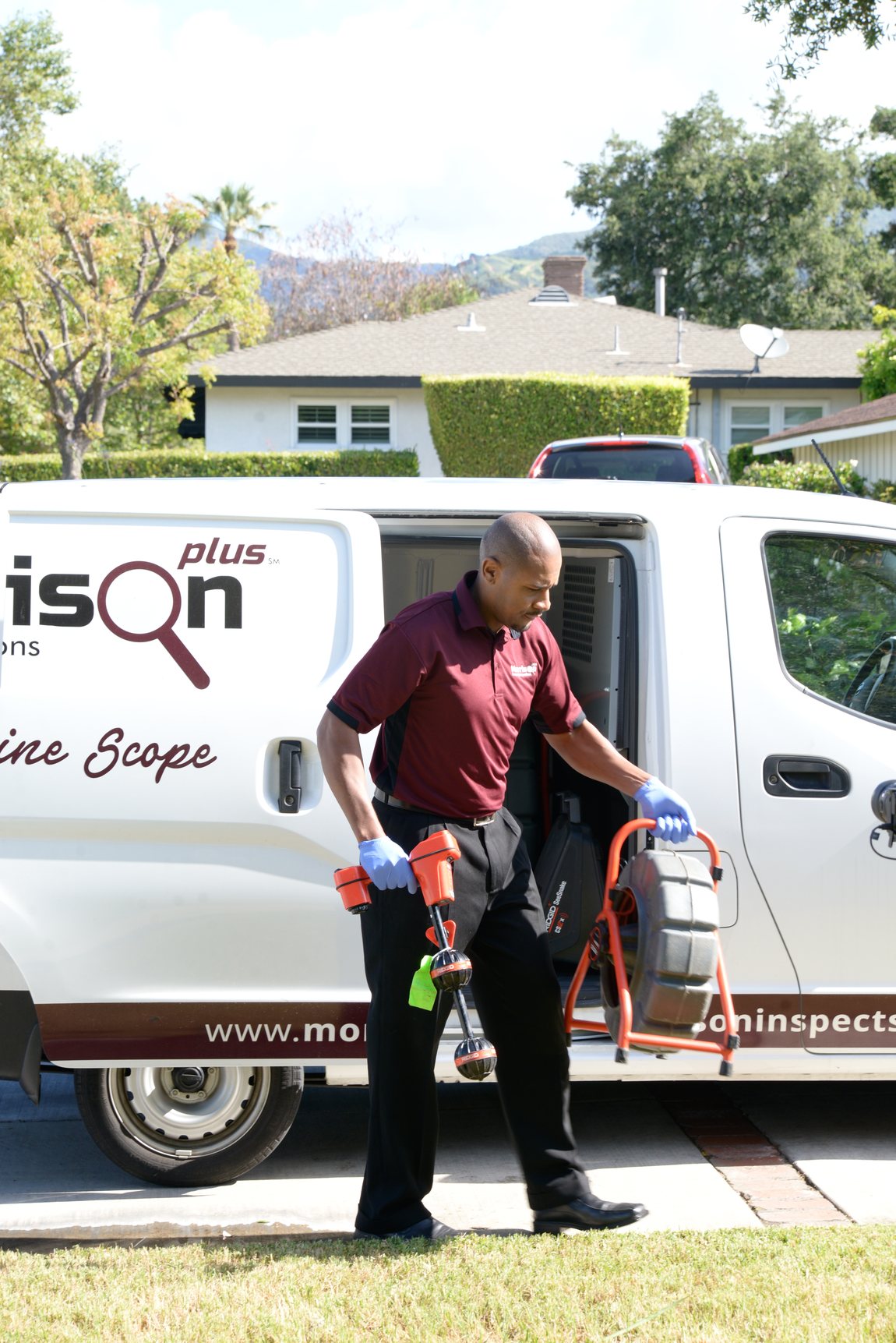
Sewer scoping is our most-requested add-on. A camera run through the line reveals underground problems — root intrusion, offsets, cracks — that no visual inspection can see. Ask to add it to your appointment.
Your inspection report
You’ll receive a complete written report — typically the same day or the next — with photographs of every significant finding and clear explanations of what each one means and why it matters. It’s organized by system, written to be read by the average person rather than another inspector, and yours to share with your agent, the seller, or a contractor.
We’d rather show you than tell you. View a complete sample Morrison Plus report — a real, de-identified inspection, exactly as you’d receive it.
How long does a home inspection take?
Most single-family homes take two to four hours, depending on size, age, and condition. Larger or older properties and add-on services take longer. We don’t work against a clock — the inspection takes as long as the house requires.
Should I attend the inspection?
Yes, if you can — at least for the walkthrough at the end, though you’re welcome for the whole thing. Walking the house with your inspector, seeing the findings in person, and asking questions on the spot is worth far more than reading about them later. You’ll also learn where the shutoffs are, which is worth the trip by itself. If you can’t be there, we’ll go through the report with you.
Do I need an inspection on new construction?
Yes. New doesn’t mean flawless. A new-construction inspection routinely surfaces missed connections, drainage problems, incomplete work, and installation defects — while there’s still time and leverage to have the builder correct them before you close.
What happens if the inspection finds problems?
Nearly every inspection finds something — that’s the point, and it’s normal. Findings aren’t a reason to panic or walk away; they’re information the seller had and you didn’t. Some are minor maintenance items, some are safety issues, and some become a repair request, a credit, or a price adjustment. Your agent handles the negotiation; our job is to make sure the facts underneath it are accurate.
Is a home inspection all I need?
For most homes, a standard inspection plus any add-ons the property calls for covers it. When you book, tell us about the property and we’ll help you decide what’s worth including.
Schedule your home inspection
Tell us about the property and we’ll match you with a Morrison Plus inspector — and help you decide which add-ons are worth including.