
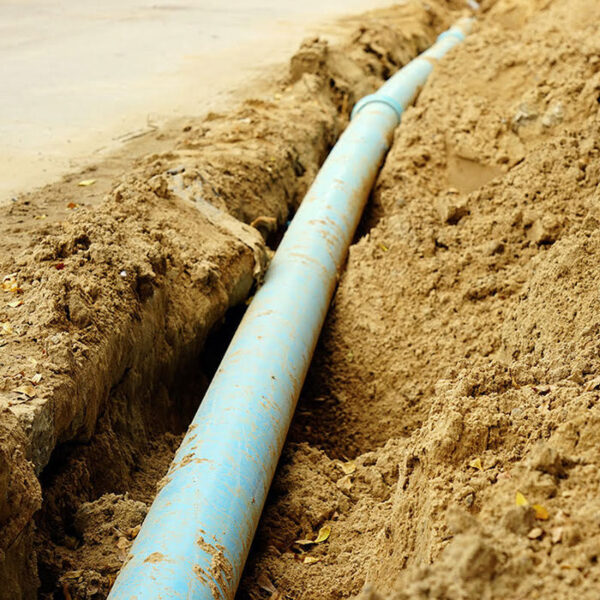
Your sewer lateral is the pipe that carries everything out of your house and into the city main. It’s buried, it’s usually decades old, and in most cities you own it — including the section running under your front yard, the sidewalk, and sometimes the street itself.
A standard home inspection can’t see it. A sewer camera can.
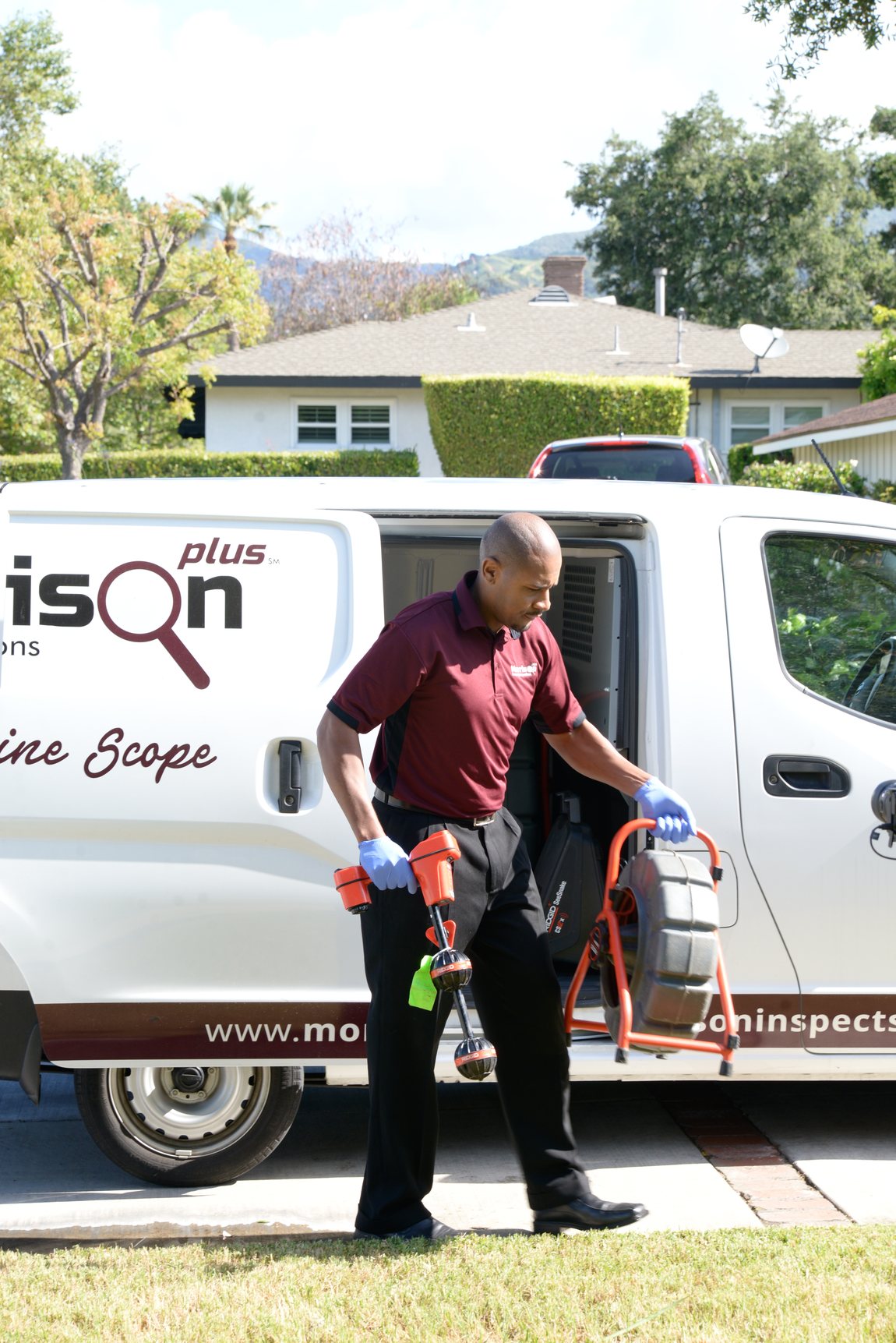
Why isn’t the sewer line part of a standard home inspection?
A home inspection is visual and non-invasive. Inspectors evaluate what can be seen and safely accessed — and a sewer lateral is buried several feet underground, from the foundation out to the city connection.
The only way to evaluate it is to send a camera down the line. That’s a separate service, and it’s why sewer scoping is offered as an add-on rather than bundled into the standard inspection.
What does a sewer line inspection actually show?
Our inspector feeds a high-resolution camera through an accessible cleanout and records the full run of the lateral. The narrated video documents:
- Pipe material — cast iron, clay, ABS, PVC, concrete, or Orangeburg
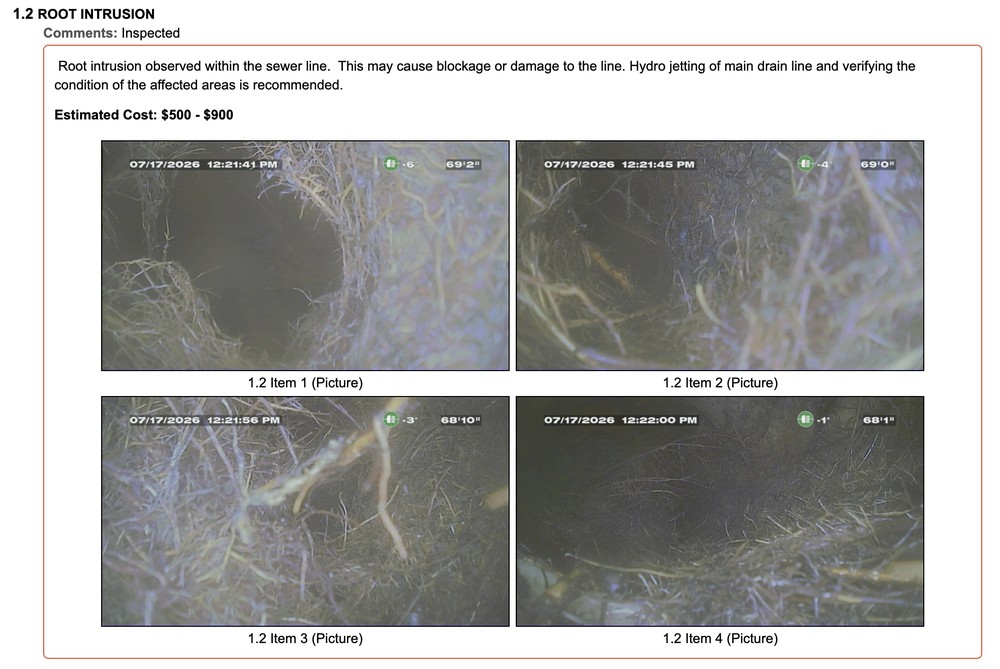
- Root intrusion at joints and cracks
- Bellies and sags where waste and water collect instead of draining
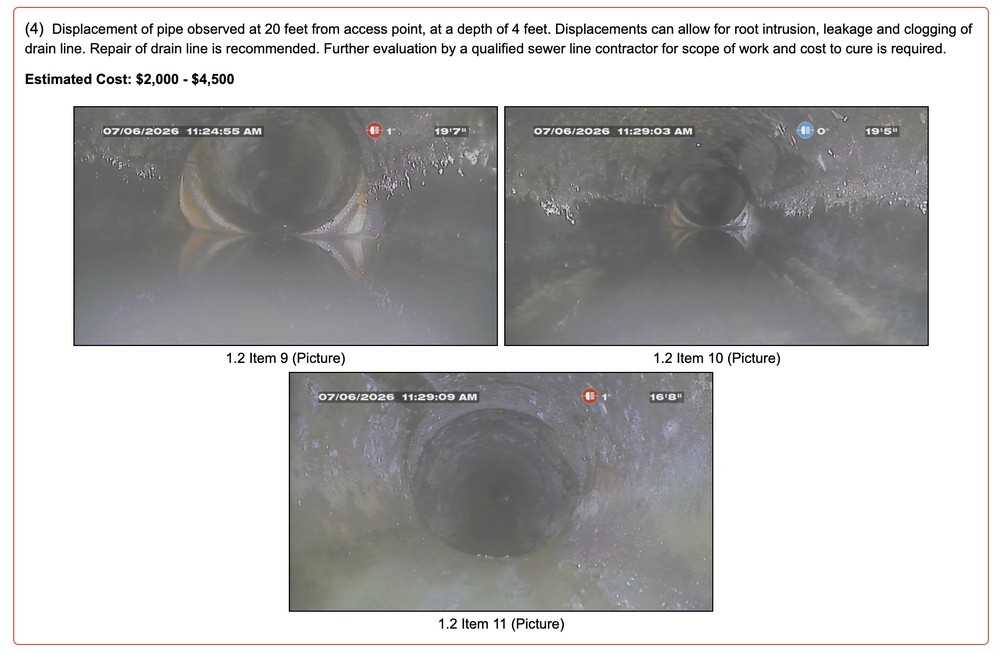
- Offset or separated joints
- Cracks, fractures, and sections of collapse
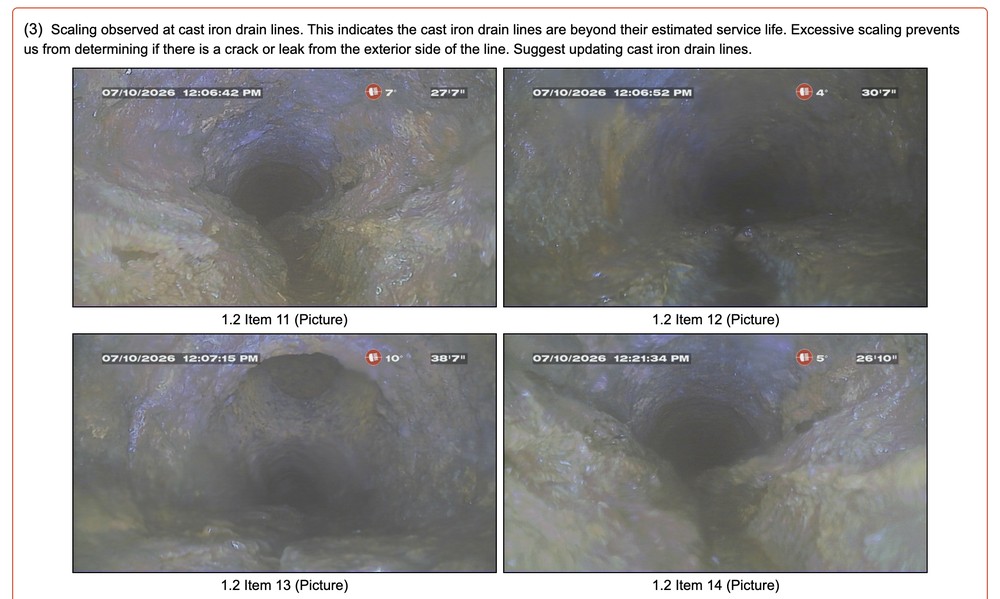
- Scale buildup, grease, and partial blockages
- Prior repairs, patches, and liner sections
What is Orangeburg pipe, and why does it matter?
Orangeburg is a bituminized fiber pipe — essentially wood pulp and tar — installed in many homes built between the 1940s and early 1970s. It was never meant to last more than about fifty years, and most of it is now well past that.
Orangeburg deforms under soil pressure. It goes oval, then flat, then it fails. If a camera finds Orangeburg in your lateral, that’s not a maintenance item. That’s a replacement on a timer, and it belongs in your negotiation before you close.
Who should get a sewer inspection?
Worth strongly considering if any of these apply:
- The home was built before roughly 1980
- There are mature trees anywhere near the line between the house and the street
- The home has cast iron or clay drain lines
- There’s a history of slow drains, gurgling, or repeated backups
- The property has been vacant, flipped, or recently remodeled
- You’re buying anything you don’t have full maintenance history on
Root intrusion is the most common finding, and mature landscaping is the most common cause. A beautiful old tree in the front yard is often the first clue.
What does a sewer repair cost if you skip the inspection?
This is the reason the service exists.
A spot repair on an accessible section may be manageable. A full lateral replacement is a different category entirely — trenching, permits, and often cutting and restoring concrete, landscaping, or street surface. Costs commonly run well into five figures, and they scale with the length and depth of the run and whatever sits on top of it.
Costs vary significantly by market and property, so treat any figure as a starting point rather than a quote.
The distinction that matters: found before closing, it’s a negotiating item. Found after, it’s yours.
Do you also repair the sewer lines you inspect?
No. We are an inspection-only company, on purpose.
Sewer scoping has a well-earned reputation problem, because in much of the industry the company holding the camera is the same company quoting the repair. That’s a direct conflict of interest, and it’s why some homeowners are told they need a full replacement when they need a cleanout.
We don’t sell sewer repairs. We don’t take referral fees. We have no financial stake in what the camera finds. If your line is in good shape, we’ll tell you it’s in good shape — and that answer is worth exactly as much as the other one.
What we give you instead is information you can act on: the condition of the line, the material it’s made of, the depth of the line, the location of any problem areas, and where possible, a fair estimate of what a repair should cost. Then you take that to a contractor of your choosing, with numbers already in hand.
What do I receive after the inspection?
- A narrated video recording of the full camera run
- A written report with still images of any findings
- The pipe material and overall condition of the line
- The depth of the line and the located position of any problem area, so a contractor knows exactly where to dig
- Where possible, a fair estimated cost range for repairs, so you have a number to work with in negotiation
Is a sewer inspection included in a Morrison Plus inspection?
Sewer line scoping is an add-on service rather than part of the standard inspection. Every Morrison Plus location offers it. Ask us to scope the line when you book — pricing varies by market and property.
The most expensive part of a house is the part nobody looked at.
Add a sewer inspection to your appointment
Ask us to scope the line when you book your inspection.